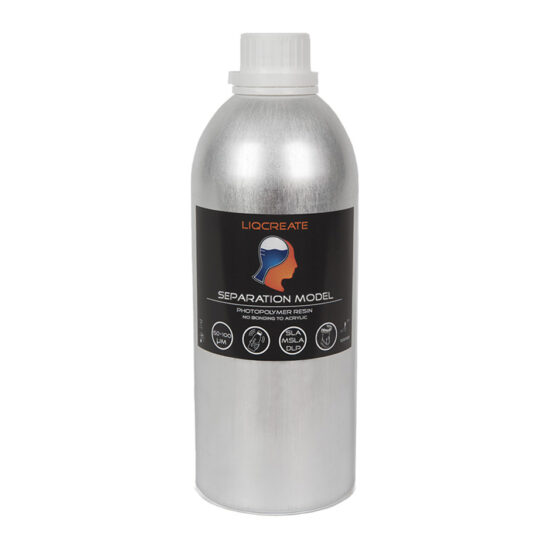
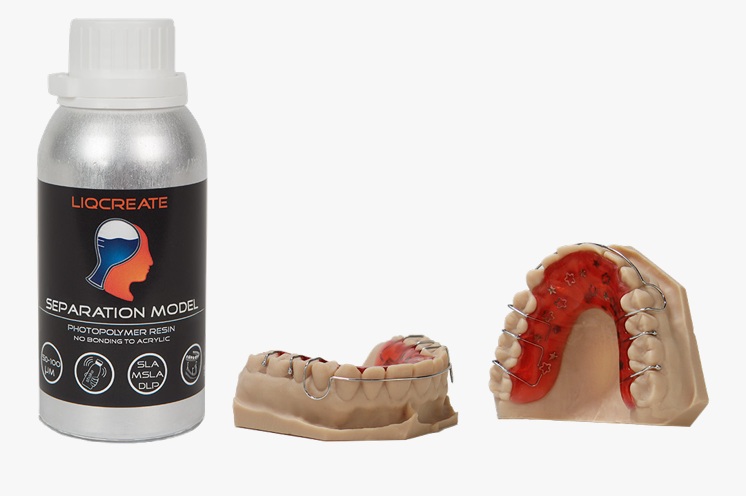
Liqcreate, the Netherlands‑based independent resin manufacturer, has released Liqcreate Separation Model, a new dental photopolymer designed to provide built‑in non‑adhesion to acrylic‑based orthodontic and prosthetic materials. The material removes the need for traditional separating agents or surface treatments, marking a significant shift in standard dental model‑making workflows.
Developed in collaboration with experienced dental and orthodontic laboratories, the resin integrates the separation functionality directly into its formulation. Traditionally, technicians must apply a separating medium before polymerizing acrylic on a printed model. With Separation Model, this step is no longer required
Rethinking the Orthodontic Appliance Workflow
The concept for Separation Model originated from feedback gathered in active dental laboratories. Technicians producing acrylic appliances—such as retainers, night guards, clasps, and partial denture extensions—have long relied on separating agents to prevent bonding between the printed model and the acrylic overlay.
Although this method works, it introduces two persistent issues:
- Additional processing time in an already labor‑intensive workflow
- Variability and inconsistency, especially when coverage is incomplete
While other materials claiming similar separation behavior exist, Liqcreate’s dental partners reported that current market options did not meet practical laboratory requirements. This led Liqcreate to develop a new formulation optimized specifically for orthodontic and prosthetic applications.
Internal testing validated the approach: printed parts show a matte surface finish and high dimensional accuracy, both essential for appliance fit and aesthetics. Beyond orthodontics, the resin supports a wide range of cold‑cure procedures, including fracture repairs, clasp additions, minor prosthetic extensions, and chairside or laboratory relines using self‑curing denture base polymers.
Because the separation agent is embedded in the resin itself, there is no risk of contamination or mixing with the acrylic, resulting in cleaner and more consistent final appliances.
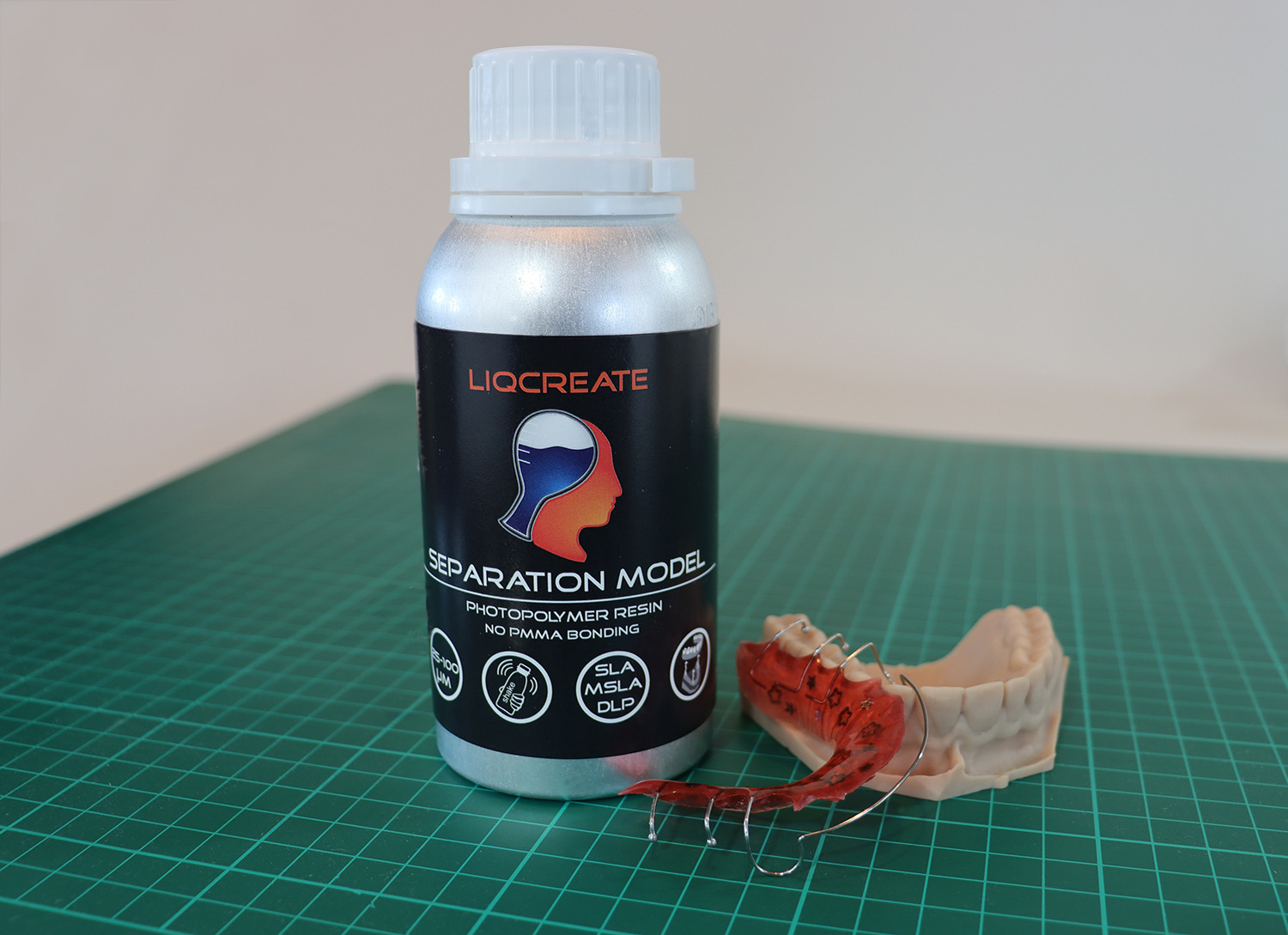
Understanding the Orthodontic Retainer Workflow
Most dental model resins are based on acrylate or methacrylate chemistry. Since these materials share a similar backbone with PMMA‑based orthodontic acrylics, they tend to bond during fabrication.
In a typical workflow:
- A digital scan is converted into a printed model.
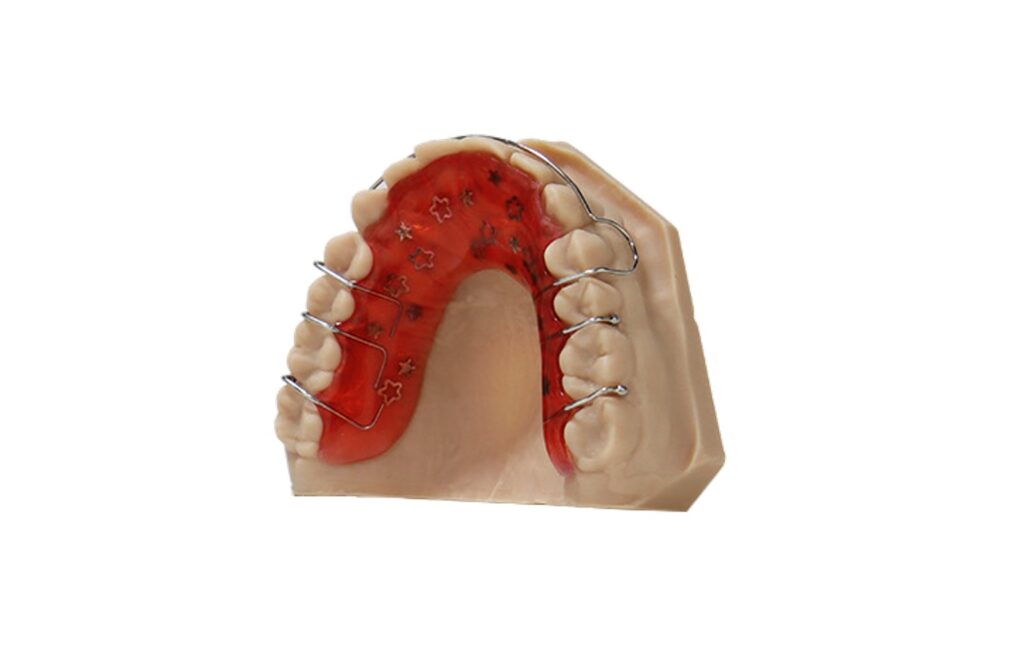
- The model is used to fabricate appliances such as Hawley retainers.
- A separating agent is applied to prevent adhesion.
This extra step adds time and introduces variability. Incomplete coverage can cause localized bonding, and removing a fused appliance may damage either the model or the prosthetic—sometimes requiring the entire process to be restarted.
Liqcreate Separation Model addresses this challenge at the material level. Its built‑in non‑adhesive properties allow technicians to apply cold‑cure or self‑cure acrylics directly onto the printed surface without a separate isolating step.
The workflow becomes:
- Standard printing
- Post‑curing
- Direct acrylic application (e.g., salt‑and‑pepper technique)
After polymerization, the appliance can be removed without the mechanical resistance typically associated with PMMA bonding. Eliminating the manual separating stage reduces one of the most failure‑prone steps in orthodontic model production. For high‑volume laboratories, this improvement has meaningful implications for throughput, repeatability, and material waste.
Broad Printer Compatibility and OEM Options
Separation Model is compatible with most open‑material DLP, MSLA, and laser‑based 3D printers operating at 385–405 nm. Supported systems range from entry‑level machines (Anycubic, Elegoo, Phrozen) to professional platforms such as Asiga and Raise3D.
Liqcreate continues to validate print parameters for additional printers, with updated profiles published on its website as new systems are qualified.
For hardware manufacturers and laboratory groups seeking private‑label or co‑branded materials, Separation Model is available for OEM rebranding and application‑specific optimization. As an independent resin producer with in‑house R&D, Liqcreate can scale custom formulations quickly and without the channel conflicts common among vertically integrated suppliers.
Customers with specific requirements—whether related to printing speed, mechanical performance, or clinical workflows—can work directly with Liqcreate’s development team to explore tailored solutions.
Liqcreate Separation Model is available now in 1 kg units (order number LSM01000) through the Liqcreate online store or via order@liqcreate.com.
Liqcreate Separation Model
Liqcreate Separation Model is a specialized photopolymer resin for 3D‑printing dental models with excellent non‑stick properties toward PMMA. It is compatible with most open DLP, MSLA, and laser‑based 3D‑printers operating at wavelengths between 385–405 nm. Printed parts exhibit high accuracy, smooth surfaces, and optimal separation behavior, making them ideal for workflows where PMMA orthodontic retainers are polymerized directly on the model and removed cleanly afterward without the use of a separation agent.
Liqcreate Separation Model requires only UV post‑curing to achieve its final mechanical performance and separation characteristics. Its reliable processing, dimensional stability, and engineered non‑stick surface make it the perfect choice for manufacturing dental models used in PMMA retainer production.
Key benefits |
3D-Printer compatibility |
| · Excellent non-stick properties towards PMMA | · Asiga UV series |
| · No need for separating agent | · Elegoo & Anycubic series |
| · Easy Ortho PMMA release | · Phrozen & Creality series |
| · High quality and smooth surface | · And many more |