
Reliable acrylic retainer workflow with Separator-Free 3D-Printing resin
Most 3D‑printing model resins are built on acrylate and methacrylate backbones. Because these resins share the same chemical “DNA” as traditional ortho‑acrylic (PMMA), they form strong chemical bonds during fabrication. For a dental lab, this chemical bond is a major headache during appliance fabrication. When a dental laboratory receives a digital scan, they print the arch and prep it for a (Hawley) retainer or bite plate. Traditionally, this requires carefully applying a separating agent or isolating medium on the 3D-printed model. If you’ve spent time at the bench, you know the risks:
-
– Wasted Bench Time: Applying and drying separators slows down your turnaround time.
-
– The missed spot: If you miss even a small spot, the cold-cure or self-cure acrylic will fuse permanently to the 3D-printed model.
-
– Failed Breakouts: Trying to pry a fused retainer off a model usually ends in a loud crack—forcing you to restart the entire salt-and-pepper process from scratch. Additionally you need to produce a new model before preparing the new retainer.
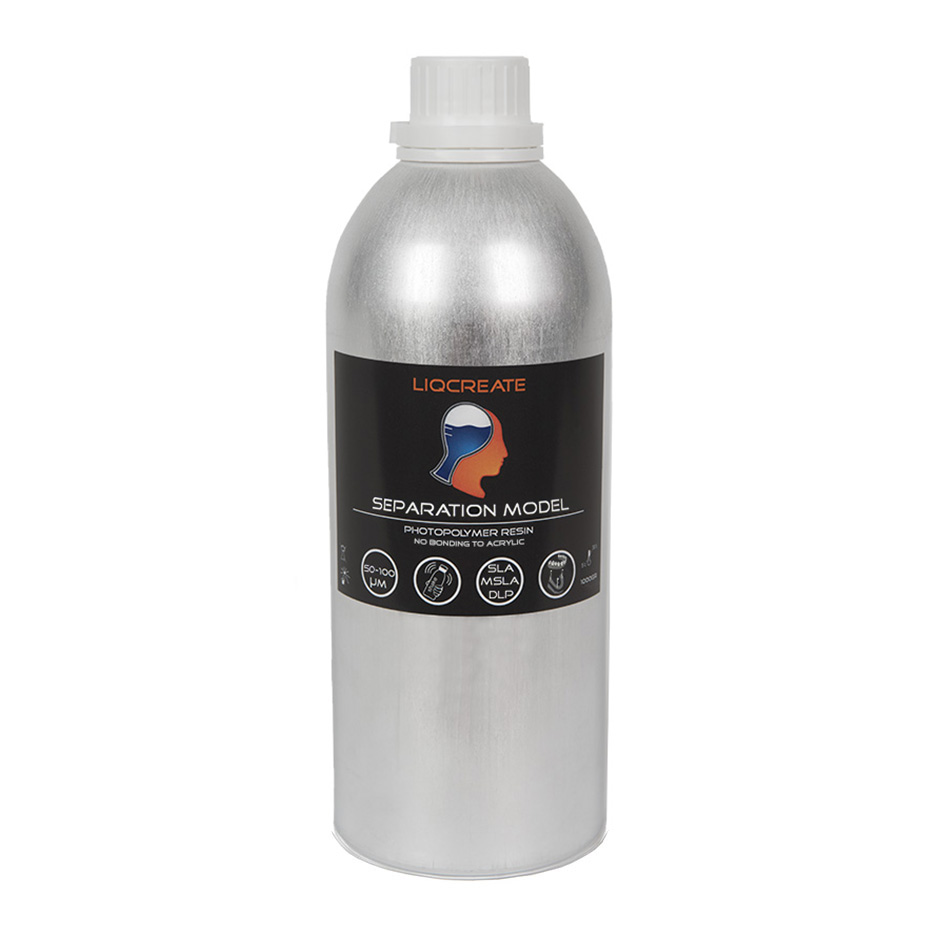
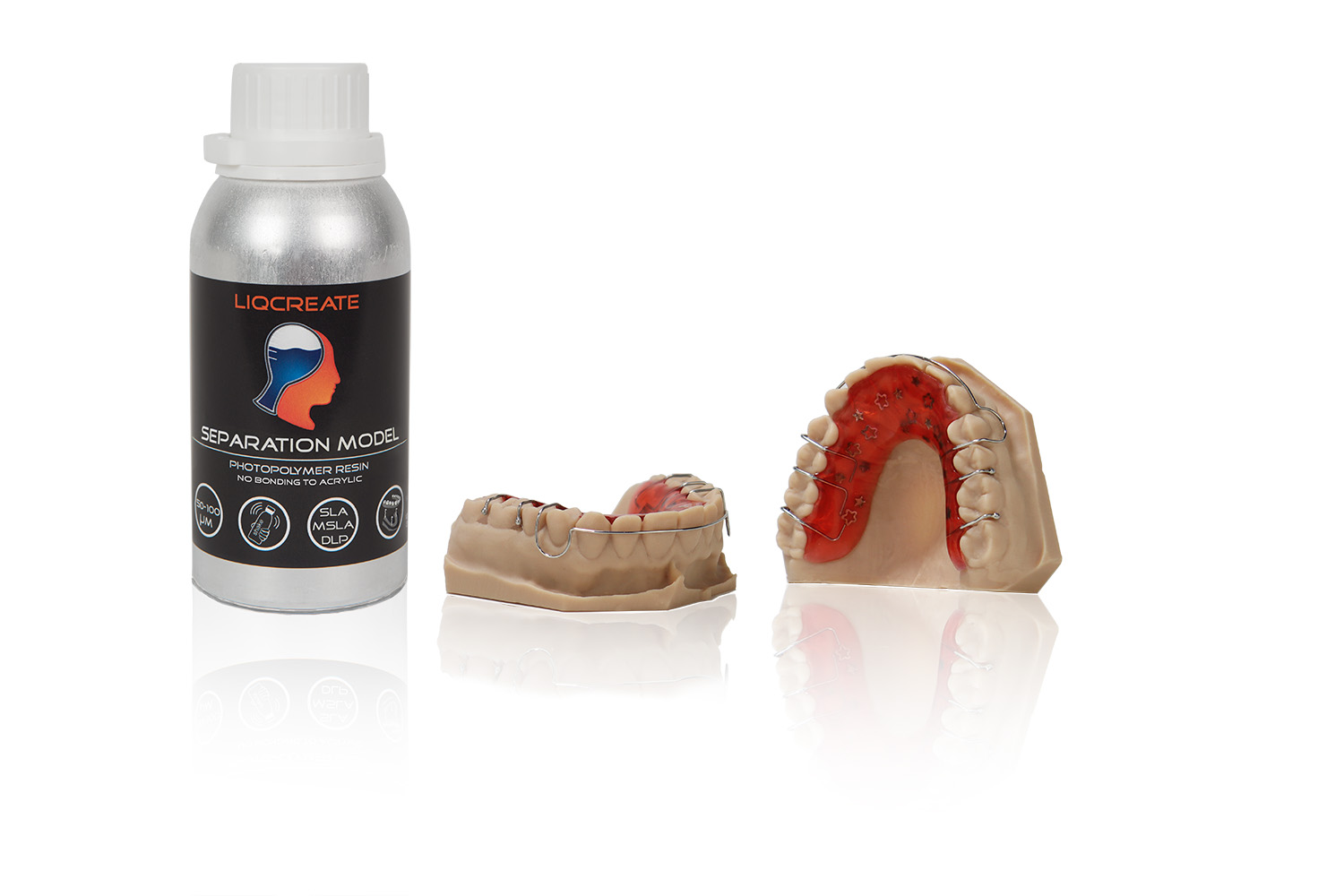
Liqcreate has engineered a specialized dental model resin designed for the orthodontic and prosthetic workflow. Unlike standard resins, this new chemistry features inherent non-stick properties toward orthodontic and prosthetic acrylics. By removing the need for a separating medium, it streamlines the digital‑to‑analog workflow
-
Print & Post-Cure: Process the model as usual.
-
Straight to Acrylic: Fabricate your prosthetic or ortho‑acrylic appliance right on the 3D-printed model—no separating medium required.
-
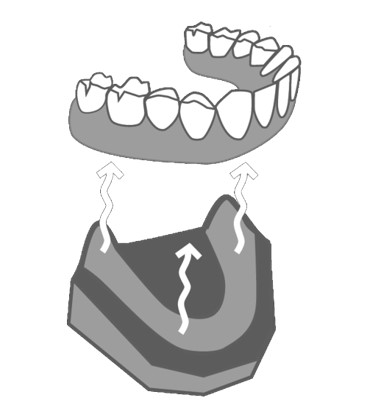
Clean Release: The finished device pops off the model effortlessly after polymerization in the pressure pan.
By removing the manual step of coating models, this eliminates the single most common cause of appliance failure during the breakout phase. Increase your lab’s output, reduce material waste, and stop worrying about fused PMMA retainers to 3D-printed models.
Technical specifications
The following mechanical properties are measured on post‑cured Separation Model resin and give an indication of stiffness, toughness, and water behavior in typical dental lab conditions.
| Mechanical Properties | UV-Cured[1] | ||
|---|---|---|---|
| Description | Method ASTM/ISO | Metric | Imperial |
| Flexural strength | D790 | 36 MPa | 5.22 ksi |
| Flexural modulus | D790 | 1.8 GPa | 261 ksi |
| Shore D Hardness | D2240 | 74 | 74 |
| Water sorption | D570-98 | 0.56% | 0.56% |
| Izod Impact notched | ISO 180 | 1.97 kJ/m2 | 1.87 ft-lb/in2 |
| Izod Impact notched | D256 | 12 J/m | 0.89 ft-lb/in |
| Separation to ortho acrylic | Internal method | Excellent | Excellent |
[1]Post-cured 30 minutes with LED curing at 60°C in the Formlabs Formcure (first generation). These values may vary and depend on individual machine processing and post-curing.

Tilt screen to see the complete technical specifications table
| Description | Value |
|---|---|
| Appearance | Opaque beige liquid |
| Viscosity | 175 mpa.s at 25°C |
| Density | 1.10 g/cm3 |
| Ec (405nm) | 8.71 mJ/cm2 |
| Dp (405nm) | 0.23 mm |
| Ec (385nm) | 8.17 mJ/cm2 |
| Dp (385nm) | 0.15 mm |
More information
For deeper insights into optimal settings used for Liqcreate Separation Model and validated workflows, explore the technical data sheet or user guide.
⤓ Technical Data Sheet ⤓ Processing instructions ⤓ User Guide
| H315: Causes skin irritation. |
| H317: May cause an allergic skin reaction |
| H319: Causes serious eye irritation |
| H335: May cause respiratory irritation. |
| H412: Harmful to aquatic life with long lasting effects |
3D Printer compatibility
Interested in working with Liqcreate Separation Model, the acrylic separation 3D‑printing resin that lets you produce prosthetic or ortho‑acrylic appliances without any separation agent? Check below to see whether validated print parameters for your specific 3D printer are already available. This ensures you get the best performance, clean separation behavior, and a smooth workflow right from the start. Send an e-mail to info@liqcreate.com if your printer is not listed.
| Printer name | Compatible? |
| Sinergia Print by Nobil Metal | Yes |
| Raise3D DF2 | Yes |
| Asiga Max UV | Yes |
| Asiga Max 2 | Yes |
| Asiga Pro 4K | Yes |
| Asiga Ultra | Yes |
| Shining3D AccuFab-L4D | Available soon |
| Uniformation GKTwo | Yes |
| Anycubic Photon Mono | Available soon |
| Anycubic Photon Mono 4 | Yes |
| Anycubic Photon Mono 4 Ultra | Yes |
| Anycubic Photon Mono SE | Yes |
| Anycubic Photon Mono X | Yes |
| Anycubic Photon M3 | Yes |
| Anycubic Photon M3 Plus | Yes |
| Anycubic Photon Mono M5s | Yes |
| Anycubic Photon Mono M7 Pro | Yes |
| Anycubic Photon Mono M7 Max | Yes |
| Anycubic Photon D2 | Yes |
| Elegoo Mars 2 | Yes |
| Elegoo Mars 3 | Yes |
| Elegoo Mars 4 | Yes |
| Elegoo Mars 5 | Yes |
| Elegoo Mars 5 Ultra | Yes |
| Elegoo Saturn 3 | Yes |
| Elegoo Saturn 4 Ultra | Yes |
| Elegoo Saturn 4 Ultra 16K | Yes |
| Phrozen Sonic Mini 4K | Yes |
| Phrozen Sonic Mini 8K S | Yes |
| Phrozen Sonic Mighty Revo 14K | Yes |
| Phrozen Sonic XL 4K 2022 | Available soon |
| Phrozen Sonic XL 4K Plus | Available soon |
| Phrozen Lumii DLP | Available soon |
| Prusa SL1S Speed | Yes |
| Prusa Medical One SLA | Yes |
| Creality Halot-One | Yes |
| Creality Halot-Mage S 14K | Yes |
| 385 – 420nm MSLA, SLA & DLP printer | Contact us |
Separation Model use cases
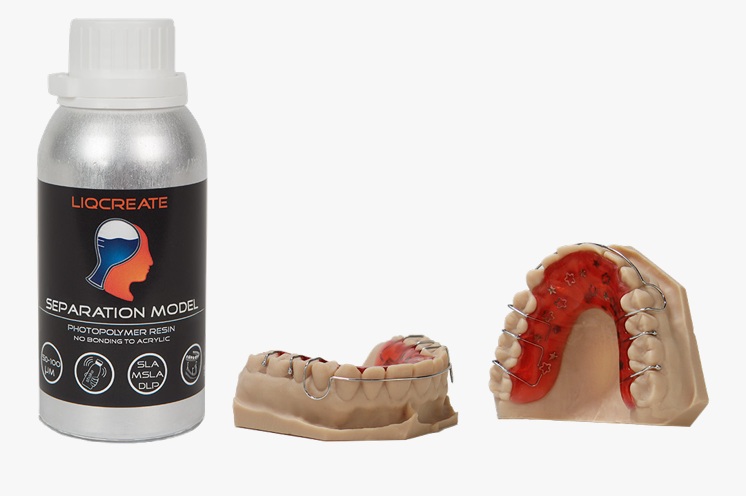
Hassle free retainer production with Liqcreate Separation Model resin. The 3D-printing resin with non-stick properties to PMMA to eliminate the use of additional separation agents!
Reviews
There are no reviews yet.