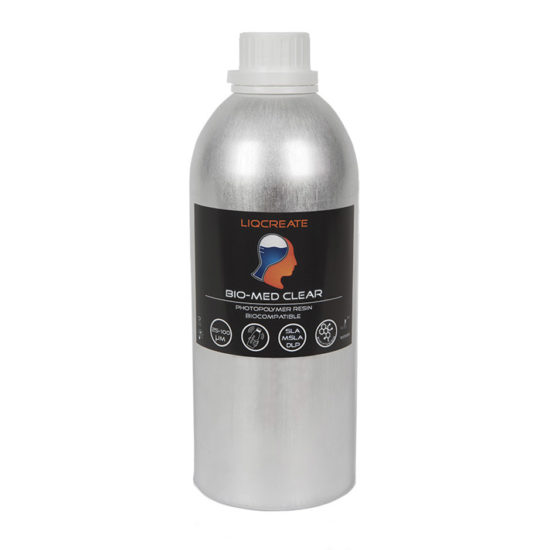
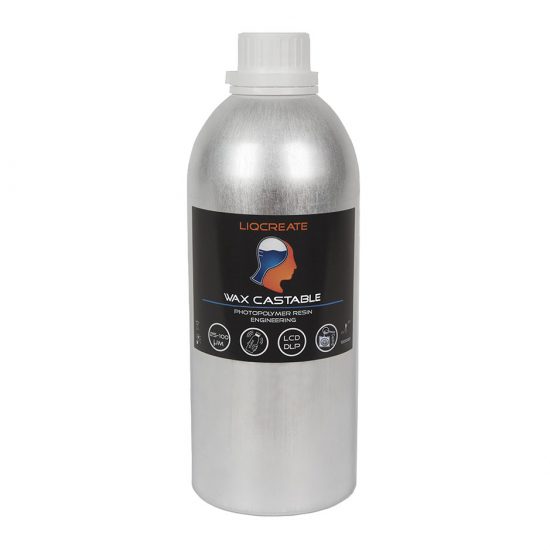
The Elegoo Mars 4 DLP uses a digital light processing projection engine that delivers high optical precision, uniform irradiance and long‑term stability compared to LCD‑based MSLA systems. Its 2K DLP projection module produces sharp pixel edges and consistent curing behavior across the entire build area. For a complete overview of all Liqcreate materials and cross‑printer compatibility, visit the Liqcreate resin parameter database.
With a build volume of 132.8 × 74.7 × 150 mm and a collimated light path, the Mars 4 DLP provides predictable cure depth, strong dimensional accuracy and reduced optical distortion. These characteristics make it suitable for engineering parts, dental models and functional prototypes. You can also view resin settings for the Elegoo Mars 4, Elegoo Mars 4 Ultra 9K and Elegoo Mars 4 Max.
If you need assistance with resin settings, calibration or workflow optimization for the Mars 4 DLP or any other resin‑based 3D‑printer, our engineering team is available through the Liqcreate support page.
Elegoo Mars 4 DLP resin 3D‑printing parameters
| Resin | Layer thickness | Exposure time (seconds) | Base layer count | Base layer exposure | Lift Height | Off-time / bottom layer | Lift speed / retract speed |
| Flexible-X | 50 µm | 12,0 | 2 | 40 | 10 | 2,0 / 2,0 | 60 / 90 |
| Bio-Med Clear | 100 µm | 5,5 | 2 | 40 | 8 | 2,0 / 2,0 | 60 / 90 |
| Wax Castable | 50 µm | 3,5 | 2 | 60 | 8 | 2,0 / 2,o | 90 / 150 |
Tough‑X, Flexible‑X and Premium Flex require heavy supports, while Elastomer‑X requires extra heavy supports due to its mechanical behavior.
Elegoo Mars 4 DLP comparison with the Anycubic Photon D2
The Elegoo Mars 4 DLP and Anycubic Photon D2 both use a DLP projection system, but differ in optical architecture, pixel geometry and mechanical design. The Mars 4 DLP uses a 2K DLP module with a smaller build volume and a compact projection path, resulting in high irradiance and sharp pixel edges. The Photon D2 features a higher‑resolution 2K DLP engine with a larger projection area, offering finer pixel structure and a wider build platform. These differences influence surface detail, cure uniformity and dimensional behavior, which are summarized in the comparison table below.
| Elegoo Mars 4 | Anycubic Photon Ultra D2 | |
| DLP Chipset | 2K | 2K |
| Pixels | 2560 * 1440 | 2560 * 1440 |
| Print size (L x W x H) | 132* 74.7 * 150 mm | 131 * 73 * 165 mm |
| Pixel size | ~0,080 mm | 0,051 mm |
| Light intensity | 4mW/cm2* | 3mW/cm2* |
- * light intensity of the Elegoo Mars 4 is from the manufacturers marketing material while the Anycubic Photon D2 was measured at the Liqcreate R&D laboratory.
About the Elegoo Mars 4 DLP resin 3D‑printing technology
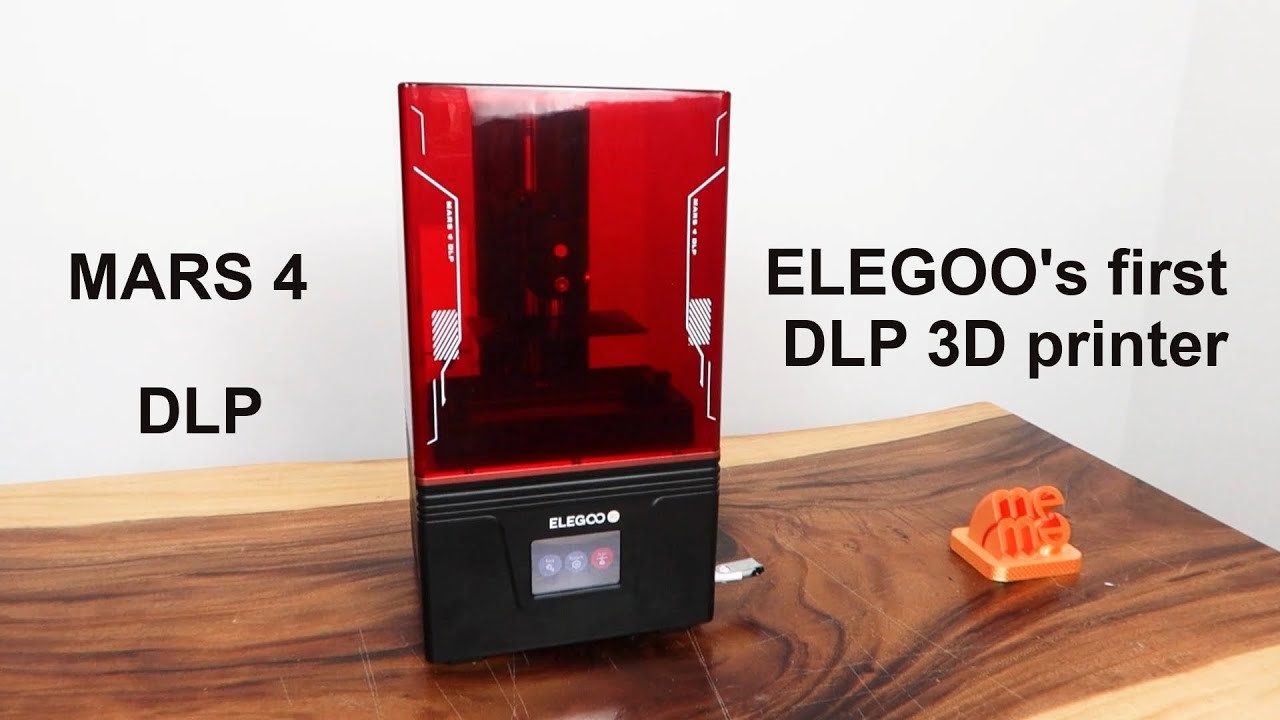
Image by Elegoo: representation how the DLP module works inside the Elegoo Mars 4 DLP resin 3D-printer.
→ Back to the Elegoo Mars‑series resin overview
Support
If you need assistance with resin settings, calibration or workflow optimization for the Elegoo Mars 4DLP or any other resin‑based 3D‑printer, our engineering team is available to help through the Liqcreate support page.
FAQ – Elegoo Mars 4 DLP resin 3D‑printing
1. What type of light engine does the Elegoo Mars 4 DLP use? The Mars 4 DLP uses a DMD‑based digital light projector with an LG UV LED source and a 13‑layer optical lens assembly, providing high irradiance and uniform exposure.
2. How does the Mars 4 DLP differ from the Anycubic Photon D2? Both printers use DLP projection, but differ in pixel geometry, projection path and build volume. The Mars 4 DLP has a compact 2K module with higher irradiance, while the Photon D2 offers a finer pixel pitch and a slightly larger projection area.
3. What if my preferred resin is not listed in the Mars 4 DLP parameter table? If your material is not included, use the Anycubic Photon D2 settings as a starting point or contact info@liqcreate.com for custom parameter support.
Support
Do you need any help with 3D printing our SLA, DLP or LCD resins? We can help you! Just look for the question you have below. If you can’t find it, let us know by contacting us!