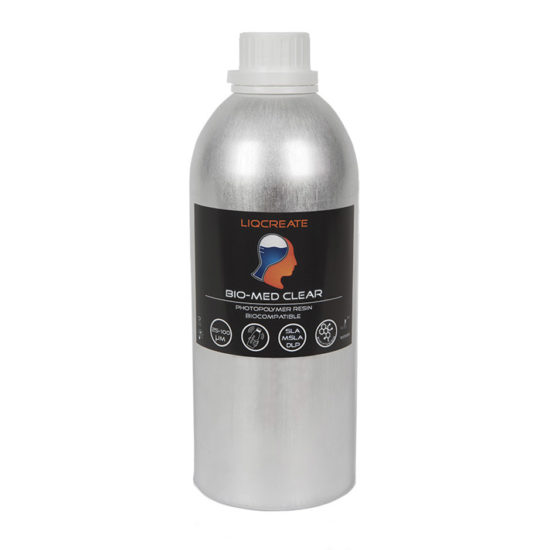
The medical and healthcare industries rely heavily on biocompatible 3D printing materials for everything from surgical guides and patient-specific models to end-use devices. Two leading transparent, rigid, and biocompatible resins in the market are Liqcreate Bio-Med Clear and Formlabs BioMed Clear.
While both resins achieve the core goal—producing non-cytotoxic, non-sensitizing parts—their differing features, certifications, and compatibility models offer distinct benefits and drawbacks for different users. Although this article is written by Liqcreate, we try to give a fair comparison on these two materials, in order to know the strengths and weaknesses of each process.
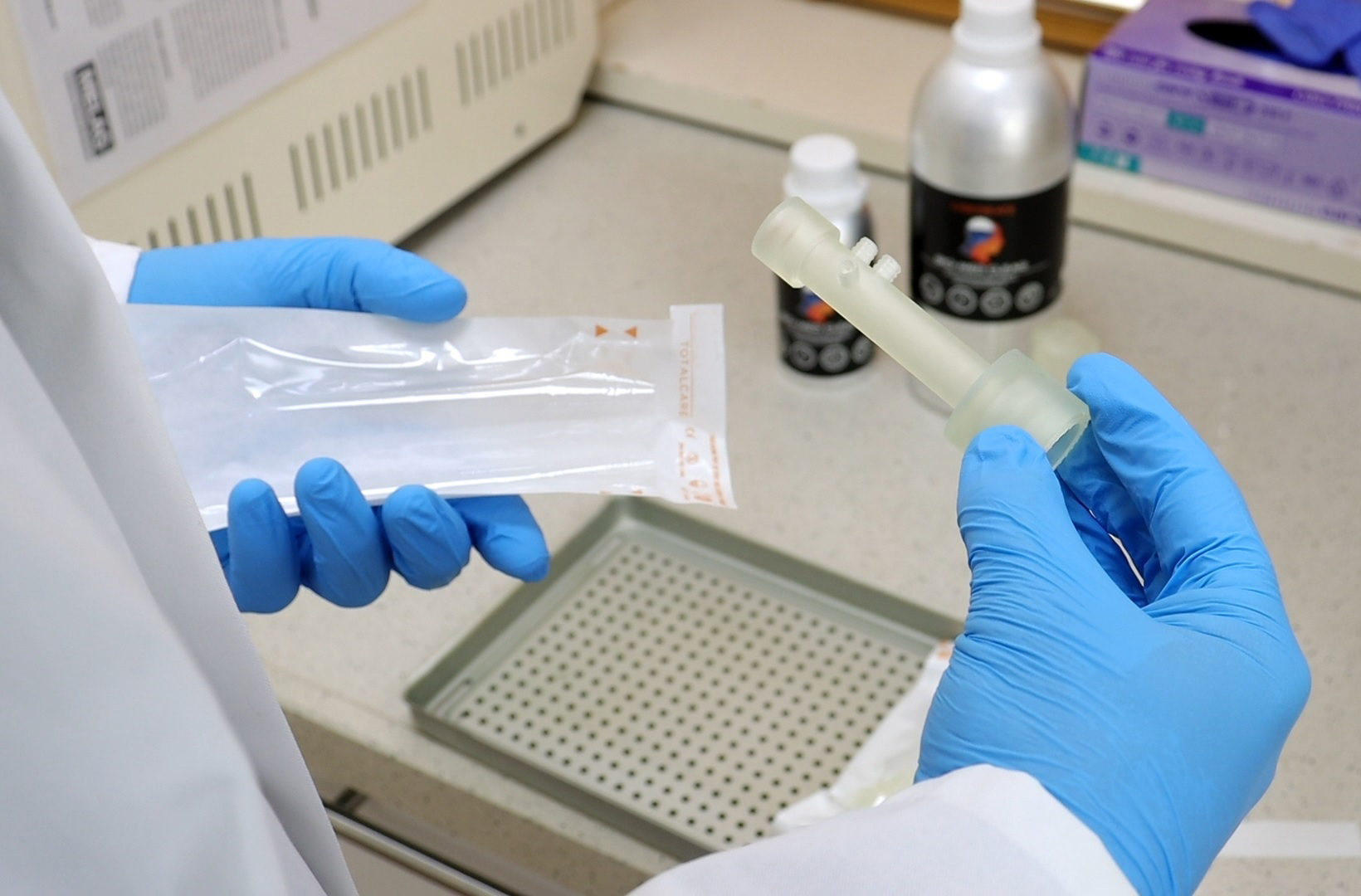
Image: Alternative for Formlabs BioMed Clear for some applications.
Support
Do you need any help with 3D printing our SLA, DLP or LCD resins? We can help you! Just look for the question you have below. If you can’t find it, let us know by contacting us!
Printer Settings →
Comparing Liqcreate Bio-Med Clear and Formlabs BioMed Clear
In the table below you can find a 1-on-1 comparison of properties, sterilization tests validated and biocompatibility tests executed for each material anno November 2025.
| Property | Liqcreate Bio-Med Clear | Formlabs BioMed Clear |
| Biocompatibility | ISO 10993-5
ISO 10993-10 ISO 10993-23 |
ISO 10993-3
ISO 10993-5 ISO 10993-10 ISO 10993-11 ISO 10993-17 ISO 10993-18 |
| Tensile Strength | 50–60 MPa | 52 MPa |
| Flexural Strength | 89 MPa | 84 MPa |
| Flexural Modulus | 2200 MPa | 2300 MPa |
| Elongation at Break | 5-10 % | 12% |
| IZOD Notched impact | 28 J/m | 35 J/m |
| Sterilization methods tested | Autoclave 121 & 134C | Autoclave 121 & 134C
Ethylene Oxide Gamma E-beam |
| Compatible 3D-printers | Wide range of LCD, DLP and SLA
Printers must be open |
Formlabs 2,3,4 series |
Liqcreate Bio-Med Clear: The Open-Source Advantage
The primary strength of Liqcreate Bio-Med Clear is its open compatibility, which offers significant advantages for certain users:
-
– Flexibility and Cost: Being an open material, it is compatible with a wide range of SLA, DLP, and LCD 3D printers, including lower-cost desktop models. This provides cost-saving opportunities and flexibility for organizations that do not rely exclusively on the Formlabs ecosystem.
-
– Customization: Users with open-source printers have the ability to fine-tune printer parameters (exposure time, lift speed, etc.) to optimize the material’s performance for specific geometries or printing conditions.
-
– Biocompatibility: It meets the fundamental biocompatibility requirements (Cytotoxicity, Sensitization, and Irritation), making it suitable for a broad array of medical devices, R&D, and custom components.
-
– Autoclavable: The material is designed to withstand steam sterilization, a critical feature for surgical tools and devices used in sterile environments.
- – Price: With a material price of only €90,90 / kg it is much cheaper then any other biocompatibility material in the market.
Formlabs BioMed Clear: The Certified Ecosystem
Formlabs BioMed Clear leverages the strength of a fully integrated hardware/software/material ecosystem:
-
– Premium Certification: The resin holds a USP Class VI certification, a more stringent standard that tests materials for biological reactivity. This is often required for pharmaceutical and drug delivery applications.
-
– Integrated Quality Assurance: It is manufactured in an FDA-registered, ISO 13485-certified facility, providing a higher level of documentation for regulated medical device manufacturers.
-
– Extended Contact Claims: Formlabs provides specific claims for long-term contact with skin and mucosal membranes, which is essential for wearables, long-term monitoring devices, and permanent airway components.
-
– Reliability and Consistency: As a closed system material, Formlabs provides validated print settings on their printers to ensure consistent, reliable results, which is highly valued in regulated medical environments.
Potential Drawbacks
Liqcreate Bio-Med Clear Drawbacks
-
– Validation Responsibility: While Liqcreate provides printing parameters, users must validate the other part of the workflow when using non-validated hardware (print settings, washing, and curing) on their specific open-source printer to ensure the final part meets all standards.
-
– Lower Barrier to Entry: Because it is used on a variety of machines, the final part quality and mechanical properties can vary significantly if the user does not follow the post-processing instructions precisely.
Formlabs BioMed Clear Drawbacks
-
– System Lock-In: The resin is proprietary and primarily restricted to Formlabs printers. This higher barrier to entry requires significant initial investment in the Formlabs ecosystem (printer, automated post-processing units, specific tanks).
-
– Higher Cost per Kilogram: This resin generally command a higher price than third-party alternatives, increasing the material cost per part.
Cheaper alternative to Formlabs BioMed resin
The Formlabs BioMed resin range offers outstanding performance for many medical applications. However, the combined cost of proprietary hardware and materials can make it less accessible for some users. Liqcreate Bio-Med Clear provides a more cheaper alternative to Formlabs BioMed Clear, delivering high-quality biocompatible prints without the premium price tag. This allows manufacturers to lower material costs while still achieving reliable results for biomedical prototypes and clinical applications.
Autoclavable 3D printer resin
If you are looking for a cost-effective autoclavable 3D-printing resin, Liqcreate Bio-Med Clear is an excellent choice. The resin is designed to withstand standard steam sterilization procedures at 121°C and 134°C (250°F and 273°F). This makes it well suited for producing tools, fixtures, and medical aids that require sterilization without compromising mechanical properties or dimensional accuracy.
Biocompatible resin for Anycubic or Elegoo 3D printers
Liqcreate Bio-Med Clear enables both hobbyists and professional users to produce biocompatible parts using almost any open resin 3D printer. This includes professional systems as well as entry-level Anycubic or Elegoo resin printers. By supporting affordable MSLA machines, it makes high-quality medical-grade resin printing accessible without the need for industrial or proprietary hardware.
ISO 10993 vs USP Class VI resin
ISO 10993 and USP Class VI are both widely used biocompatibility standards in medical materials testing, but they differ in scope and focus. ISO 10993 evaluates medical devices for potential biological risks such as cytotoxicity and sensitization, while USP Class VI emphasizes systemic toxicity and material purity. Liqcreate Bio-Med Clear is developed to meet relevant ISO 10993 biocompatibility requirements. If your application specifically requires a USP Class VI–certified resin, Formlabs BioMed Clear is the best option.
Biocompatible resin for Creality and Phrozen 3D printers
Tired of investing in expensive hardware to produce biocompatible plastic parts? When developing Liqcreate Bio-Med Clear, the focus was not limited to professional systems alone. This resin is compatible with almost all open DLP, MSLA, and LCD-based resin 3D printers—from professional and highly stable Asiga systems to entry-level Creality and Phrozen printers. As a result, producing biocompatible parts is now possible without breaking the bank.
Conclusion: Choosing the Right Biocompatible Resin
The choice between Liqcreate Bio-Med Clear and Formlabs BioMed Clear depends entirely on your application and your existing 3D printing infrastructure:
-
– Choose Formlabs BioMed Clear when your application requires USP Class VI certification, long-term contact claims, or if you operate within a highly regulated environment (like a hospital or FDA-registered manufacturing facility) where the simplicity and consistency of a closed, validated ecosystem are critical.
-
– Choose Liqcreate Bio-Med Clear if: You own an open-source DLP/LCD/SLA printer (and need to print biocompatible parts), you require steam sterilization (autoclaving), or you have the technical expertise to validate your custom post-processing workflow to meet the necessary medical standards.
Ultimately, each option has its own set of customers, but Formlabs offers a higher degree of regulatory assurance due to its controlled ecosystem, while Liqcreate offers greater versatility and accessibility across different hardware platforms.
Liqcreate Bio-Med Clear
Liqcreate Bio-Med Clear is a rigid clear biocompatble photopolymer resin and can be processed on most resin based 3D-printers. 3D-printed parts from this material exhibit biocompatible properties when post processed according to the processing instructions1. After washing and post-curing according to the instructions, printed parts from Liqcreate Bio-Med Clear pass the biocompatibility tests of:
| ○ Cytotoxicity | ISO 10993-5:2009 |
| ○ Sensitization | ISO 10993-10:2021 |
| ○ Irritation | ISO 10993-23:2021 |
Printed parts from Bio-Med Clear can be disinfected with commonly used disinfectants and sterilized by steam sterilization using an autoclave.
Key benefits |
3D-Printer compatibility |
| · Biocompatible | · Asiga series |
| · Steam sterilization possible | · Phrozen series |
| · High accuracy | · Elegoo & Anycubic series |
| · Dimensional stable | · And many more |